Humboldt Waterkeeper
  • About Us
    • Our Mission
    • Waterkeeper Alliance
  • Humboldt Bay
    • Geography
    • Wildlife
    • Bay Issues
    • Photo Gallery
  • Programs
    • Toxics Initiative
    • Water Quality
    • Bay Tours
    • Community Outreach
  • Get Involved
    • Report Pollution
    • Speak Out
    • Volunteer
    • Donate
    • Membership
    • Stay Informed
  • Contact Us
  • News
    • Latest
    • Press

News

Sea Level Rise at the Arcata Marsh

Details
Jennifer Kalt
News
Created: 03 January 2025
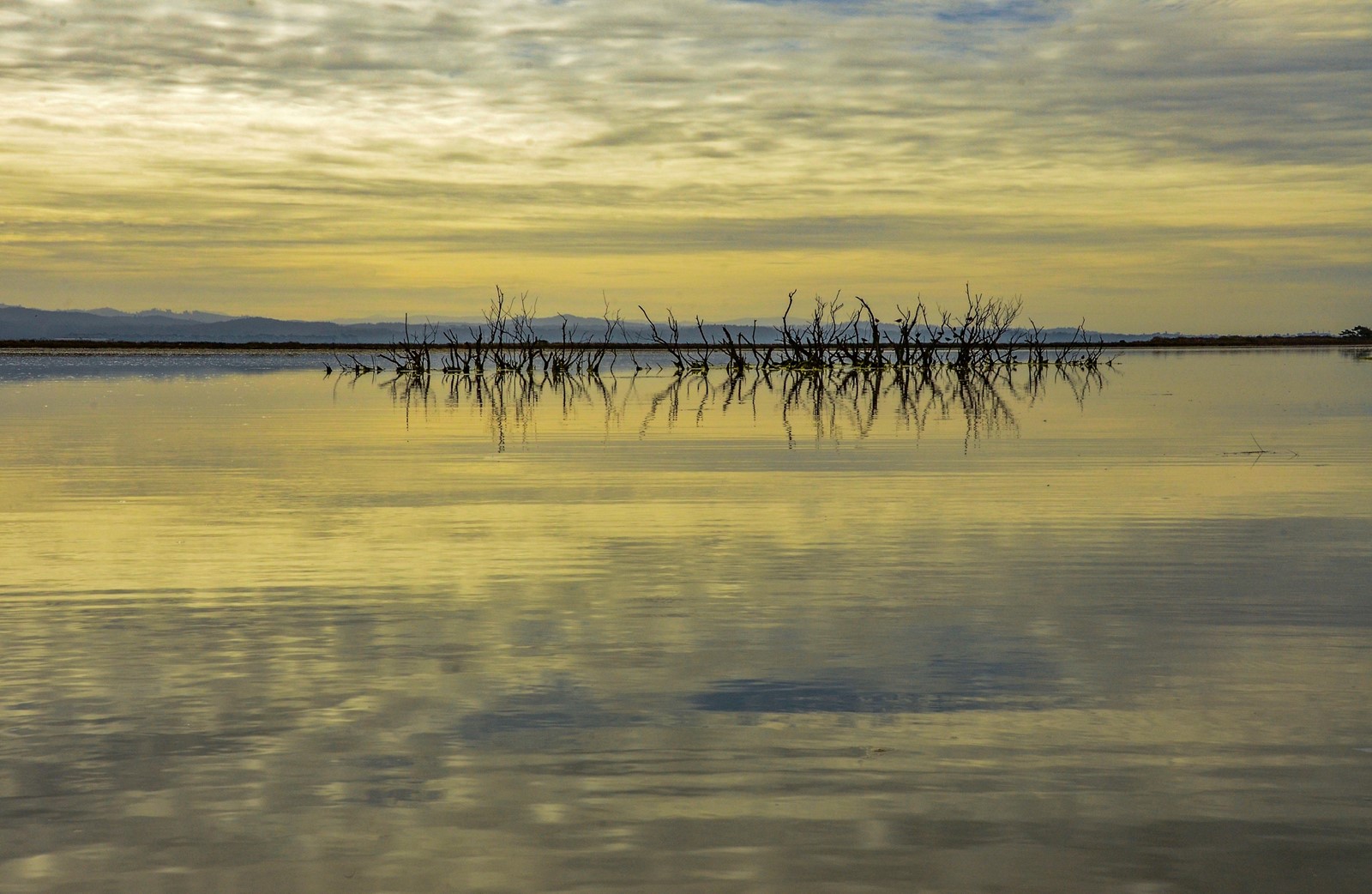
“Sea Level Rise: North Unit of the Arcata Marsh,” an exhibition of photographs by Aldaron Laird, is on display through February at the Arcata Marsh Interpretive Center, 569 South G St. in Arcata. Hours are Monday from 1 to 5 p.m. and Tuesday through Sunday from 9 a.m. to 5 p.m.
Read more …

Waterkeeper Alliance

Details
Humboldt Baykeeper
News
Created: 09 April 2009
The international Waterkeeper Alliance connects local Waterkeeper programs to provide a voice for waterways and their communities worldwide. To champion clean water and strong communities, Waterkeeper Alliance advocates for issues common to Waterkeeper programs.

Each Waterkeeper program is an independent organization that reflects the needs of the waterbody and community it represents. The common thread for each Waterkeeper program is a person who serves as the public advocate for that body of water. 

Waterkeepers are part investigator, scientist, lawyer, and advocate who represent all the users of the watershed who rely on clean water. All Waterkeepers also have a boat ranging in size from canoes to research vessels, but sometimes a pair of hip boots is more important than a boat. Sometimes a legal brief is more important than either. Each waterbody has its own unique challenges requiring a distinct and well-defined strategy.

Waterkeeper Alliance Member

Contact Humboldt Waterkeeper

Details
Humboldt Baykeeper
News
Created: 09 April 2009
Humboldt Waterkeeper
 
Mailing Address:
600 F Street, Suite 3 #810
Arcata, CA 95521
 
Physical Address:
145 G Street, Suite A
Arcata, CA 95521
 
707.499.3678
 
Jennifer Kalt, Executive Director
707.499.3678
This email address is being protected from spambots. You need JavaScript enabled to view it.

Jasmin Segura, Bay Tours Coordinator
707.601.1142
This email address is being protected from spambots. You need JavaScript enabled to view it.
 
Sylvia van Royen, GIS and Policy Analyst
This email address is being protected from spambots. You need JavaScript enabled to view it.
 
To receive occasional email updates and action alerts, send an email to:
This email address is being protected from spambots. You need JavaScript enabled to view it.
Humboldt Bay oyster seeds support 1,500 West Coast jobs, report finds

Details
Maranda Vargas, Eureka Times-Standard
Latest
Created: 18 September 2026
More than 450 million shellfish seed produced annually generate $31 million economic output
Humboldt Bay’s mariculture sector supported 57 local jobs while generating $31.1 million in total economic output in 2024, according to a new economic analysis prepared by the Schatz Energy Research Center at Cal Poly Humboldt, with the National Oceanic and Atmospheric Administration’s California Sea Grant College Program, which funds marine research, education, and outreach throughout California.
“Shellfish are an important piece of Humboldt County’s social, cultural, and economic fabric. Clams, cockles, and other shellfish have been harvested by the Wiyot people of Humboldt Bay (Wigi) since time immemorial,” the report states. “The Wiyot people continue these practices today, and with the return of ancestral lands such as Digawututklh (on the Samoa Peninsula), traditional harvesting of clams and other shellfish can resume. Commercial shellfish farming has been substantially present in Humboldt Bay since 1955, though attempts to build an industry in the Bay date back as early as 1896.”
The Humboldt Bay Shellfish Mariculture Business Survey: Assessing Economic Conditions and Contributions report authored by Tanner Etherton, Kevin Johnson, and Arne Jacobson surveyed responses from seven of the eight local shellfish businesses and found Humboldt Bay produced 459 million individual shellfish seed, a 152% increase since 2016.
“Humboldt Bay occupies a key position in the California and West Coast shellfish mariculture industry because of its longstanding high-health status, uniquely strong tidal exchange, and stable, healthy ecosystems. Its shellfish industry has produced more than half of California’s market-sized oysters annually since 2015 and more than half of all farmed shellfish in 2024,” the report states. “That same year, it supplied at least 177 businesses with market-sized shellfish, and 136 farms with shellfish seed. Because no other California bay currently possesses the same high-health status allowing it to export seed to other states, Humboldt Bay serves a unique role in the U.S. West Coast shellfish industry.”
Tanner Etherton, a co-author of the report, said an aquaculture advisory committee was formed in response to the Heavy Lift Marine Terminal proposal for offshore wind, giving growers and Harbor District staff a venue to work through potential impacts and possible mitigation measures.
“The Harbor District set up an aquaculture advisory committee to work with the Harbor District and the industry to discuss some of the implications of the project proposal. The objectives were to understand the project better, what the impacts might be to the industry, and to propose and evaluate mitigation measures. And so, through that advisory committee, they requested that an economic analysis be conducted to understand the economic conditions of the industry today prior to this proposed development.”
Keep Reading
Download the report: Humboldt Bay Shellfish Mariculture Business Survey: Assessing Economic Conditions and Contributions

US datacenters face further backlash over wastewater pollution

Details
Oliver Milman, The Guardian
Latest
Created: 12 September 2026

From rare bacteria to ‘forever chemicals’, a series of cases of violations or alleged pollution has prompted alarm

When officials in Wyoming conducted a routine test on the water that was being discharged from a massive under-construction Meta datacenter, it was a shock to find it contained a rare and potentially hazardous bacterium.
While the wastewater flushed into sewers in Cheyenne, Wyoming, was never destined for the public drinking supply, the presence of Cupriavidus gilardii bacterium in 801,000 gallons of water ejected by a contractor for the datacenter earlier this year was still unnerving.
Concerned that residents could be exposed to the bacteria if they inhaled evaporating droplets of the water used for irrigation, Cheyenne officials took until July before deciding to stop taking wastewater from Meta’s contractor, Goat Systems – a decision that is now being appealed.
“It was a big surprise,” said Frank Strong, water resources manager at the city’s board of public utilities, about the discovery. “Out of a sense of caution we’ve shut it down until we can find out more information.”
Meta, which is behind the $800m, 960-acre artificial intelligence (AI) datacenter campus, said independent testing by its contractor found no evidence of the bacterium and questioned the validity of the city’s own tests.
“Meta is committed to being a good neighbor in Cheyenne, which includes helping protect local water resources,” said a company spokesman. “We appreciate the board of public utilities’ detailed release of information, which confirms the board found no impact to the public or environment.”
However, the bacteria-laden water in Wyoming is just the latest in a series of alarms raised across the US about datacenters and water – not just how much of it they are sucking up, but also what’s in the water when it is funneled back into rivers, streams and public water systems.
In Virginia, authorities have brought enforcement actions against several datacenters for wastewater and wetland permit violations, in West Virginia stormwater runoff from an incomplete datacenter has twice flooded surrounding houses, all while locals and activists have campaigned against the discharge of heated water from an upcoming datacenter into Lake Seneca, in New York.
The Waterkeeper Alliance, a network of environmental organizations, said 55 of its affiliated groups across the US were working on datacenter-related issues, with 80% of these campaigns centered on concerns that pollutants may be leaching into the environment via discharged water.
Some of this backlash is now set to play out in the courts. In Georgia, Flint Riverkeeper has said it will sue the QTS datacenter in Fayetteville for allegedly ejecting “massive amounts of dirt [and] massive concentrations of metals” into the Flint River over the past two years.
Keep Reading

More Articles …

  1. A coastal development exemption in Santa Monica? Shame on Gov. Newsom
  2. Newsom pushes environmental carve-out for campaign donor’s Santa Monica project
  3. Who Controls the California Coast? SpaceX, Oil and a Fight Over Coastal Power
  4. Researchers Found Almost Triple the Normal Number of Dead Marine Mammals on North Coast Beaches Last Month

Latest

Press

Page 1 of 203
  • Start
  • Prev
  • 1
  • 2
  • 3
  • 4
  • 5
  • 6
  • 7
  • 8
  • 9
  • 10
  • Next
  • End

Advanced Search

Current Projects

  • Mercury in Local Fish & Shellfish
  • Nordic Aquafarms
  • Offshore Wind Energy
  • Sea Level Rise
  • 101 Corridor
  • Billboards on the Bay
  • Dredging
  • Advocacy in Action
  • Our Supporters
Report A Spill
California Coastkeeper
Waterkeeper Alliance
Copyright © 2026 Humboldt Waterkeeper. All Rights Reserved.